


Powered By MNT Group
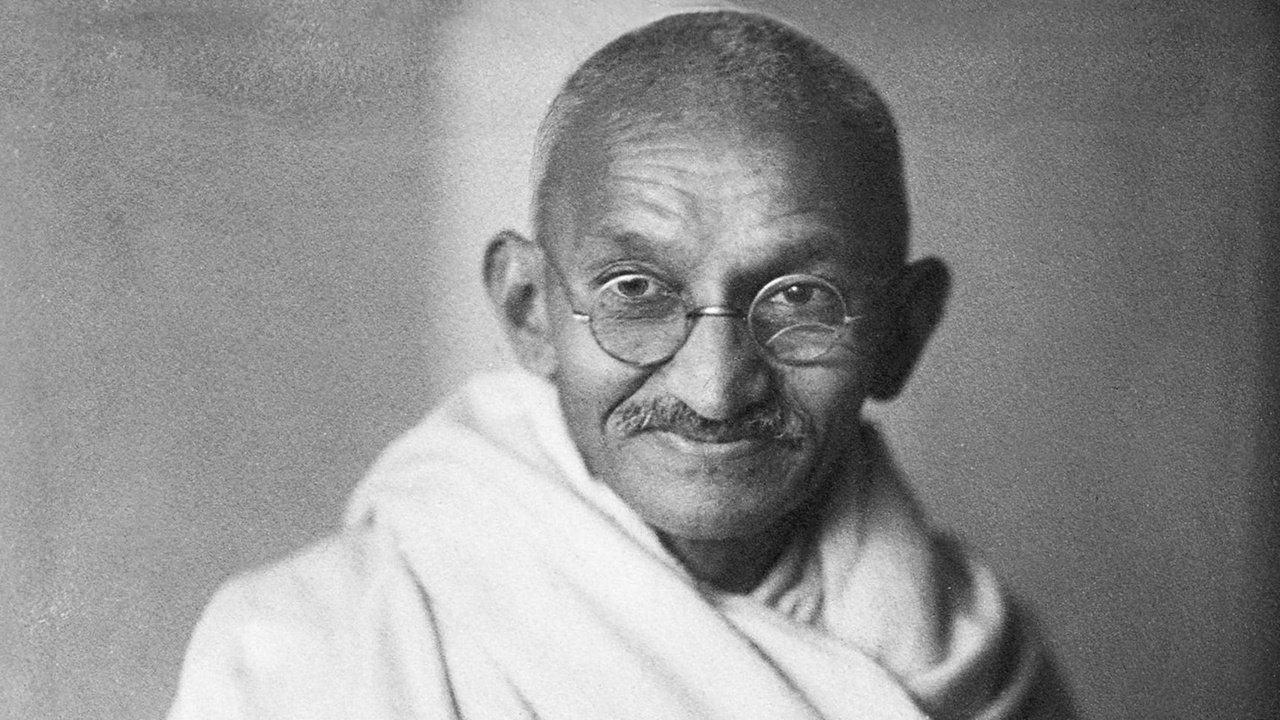
Mahatma Gandhi's life was full of unexpected changes. He was once a shy young man who struggled to speak in public. He travelled to England to study law, went to South Africa to work as a lawyer, and eventually became one of the most influential leaders in India's struggle for independence.
But how did an ordinary lawyer become a leader of millions? What happened to him in South Africa? Who was his wife, Kasturba Gandhi? How did he challenge British rule without leading an armed revolution? And why was he assassinated?
The story of Mohandas Karamchand Gandhi is not just the history of one freedom fighter. It is also the story of a man whose ideas about truth, non-violence and justice influenced movements across the world. Understanding his life means looking at both his achievements and the difficult questions surrounding his decisions.
In this article, we explore Mahatma Gandhi's biography in English, including his childhood, education, family, political movements, philosophy, relationships, controversies, assassination and lasting legacy.
Quick Facts About Mahatma Gandhi:
1. Who Was Mahatma Gandhi?
2. When and Where Was Mahatma Gandhi Born?
3. Who Were Mahatma Gandhi's Parents?
4. What Was Mahatma Gandhi's Childhood Like?
5. Why Did Mahatma Gandhi Go to England?
6. How Did Gandhi Become a Lawyer?
7. Why Did Mahatma Gandhi Go to South Africa?
8. When Did Gandhi Return to India?
9. What Was Gandhi's Role in India's Independence Movement?
10. What Were the Major Movements Led by Mahatma Gandhi?
11. What Were Mahatma Gandhi's Main Principles and Beliefs?
12. What Was Gandhi's Relationship With Other Freedom Fighters?
13. Did Mahatma Gandhi Support the Partition of India?
14. Why Is Mahatma Gandhi Controversial?
15. How Did Mahatma Gandhi Die?
16. What Books Did Mahatma Gandhi Write?
17. What Were Mahatma Gandhi's Greatest Achievements?
18. Why Is Mahatma Gandhi Still Remembered Today?
19. Important Places Associated With Mahatma Gandhi
Conclusion
Frequently Asked Questions
| Full name: | Mohandas Karamchand Gandhi |
|---|---|
| Popular name: | Mahatma Gandhi |
| Also known as: | Bapu |
| Date of birth: | 2 October 1869 |
| Birthplace: | Porbandar, Gujarat, India |
| Father's name: | Karamchand Uttamchand Gandhi |
| Mother's name: | Putlibai Gandhi |
| Wife: | Kasturba Gandhi |
| Children: | Four sons: Harilal, Manilal, Ramdas and Devdas |
| Profession: | Lawyer, political leader and social reformer |
| Famous for: | Non-violence, Satyagraha and India's independence movement |
| Major movements: | Champaran, Non-Cooperation, Civil Disobedience and Quit India |
| Date of Death: | 30 January 1948 |
| Place of death: | New Delhi, India |
| Assassin: | Nathuram Godse |
Mahatma Gandhi was an Indian lawyer, political leader, freedom fighter and social reformer who played a major role in India's struggle against British colonial rule. He became internationally known for promoting non-violence, truth and peaceful resistance as methods of fighting injustice.
His full name was Mohandas Karamchand Gandhi. People affectionately called him Bapu, meaning father, and Mahatma, meaning great soul.
Gandhi believed that people could challenge powerful governments and unjust laws without using violence. He developed and practised a method of peaceful resistance known as Satyagraha. Through public protests, marches, boycotts, fasting and civil disobedience, he encouraged ordinary Indians to participate in the independence movement.
Gandhi was not the only person responsible for India's independence. Thousands of freedom fighters, revolutionaries, political leaders, social reformers and ordinary citizens contributed to the struggle. However, his ability to organise mass movements made him one of its most influential leaders.
He also influenced international leaders and movements, including Martin Luther King Jr.'s civil rights movement in the United States.
Mahatma Gandhi was born on 2 October 1869, in Porbandar, a coastal town in present-day Gujarat, India. At that time, Porbandar was part of the Kathiawar region, which consisted of several princely states.
His birth name was Mohandas Karamchand Gandhi. He was born into a Hindu Modh Bania family.
His childhood home is associated with Kirti Mandir, a memorial in Porbandar that preserves the history of his birthplace.
Today, 2 October is celebrated as Gandhi Jayanti, a national holiday in India. The United Nations also observes this date as the International Day of Non-Violence, recognising Gandhi's contribution to the philosophy of peaceful resistance.
His father's name was Karamchand Uttamchand Gandhi, popularly known as Kaba Gandhi. He served as a senior administrator and chief minister (Diwan) in several princely states, including Porbandar and Rajkot. His work involved handling administrative matters, advising rulers and managing government affairs.
His mother's name was Putlibai Gandhi. She was deeply religious and followed a disciplined lifestyle. Prayer, fasting, religious observances and self-control were important parts of her daily life. Gandhi often referred to his mother's influence when discussing his childhood and the development of his moral values.
Gandhi spent his early childhood in Porbandar before his family moved to Rajkot.
He was not known as an exceptionally brilliant or naturally confident student. In his autobiography, he described himself as an average student who was shy and preferred to avoid unnecessary attention. He was particularly uncomfortable with public speaking and social situations.
● He was deeply influenced by his parents' religious beliefs.
● He was shy and generally avoided speaking unnecessarily.
● He developed an interest in moral stories and religious teachings.
● He experienced family responsibilities and expectations at a young age.
● He later wrote openly about his mistakes, fears and personal struggles.
Gandhi was a reasonably good student, although he did not consider himself academically exceptional. He studied at schools in Rajkot and later attended Samaldas College in Bhavnagar. He left college after a short period because his family wanted him to pursue a legal career in England.
In 1888, Gandhi travelled to London, England, to study law. He was approximately 18 years old. His family and well-wishers believed that becoming a barrister would give him better professional opportunities.
Before leaving India, Gandhi made personal promises to his mother concerning food and conduct. He wanted to maintain his religious commitments while living abroad.
During his time in London, he studied law at the Inner Temple, maintained a vegetarian diet, became interested in vegetarian organisations and read religious and philosophical literature. He developed an interest in the Bhagavad Gita and other spiritual writings.
In June 1891, Gandhi completed his legal studies and was called to the Bar. He returned to India shortly afterwards. His experiences in London helped shape his interests in religion, ethics, self-discipline and personal development.
After returning to India in 1891, Gandhi attempted to establish a legal practice in Bombay and Rajkot. However, his early career did not go particularly well. He lacked confidence in court and found it difficult to present arguments before judges.
Later, he worked as a legal draftsman in Rajkot. In 1893, he received an opportunity to travel to South Africa to assist an Indian business firm with a legal case. This professional assignment changed the direction of his life.
Gandhi travelled to South Africa in 1893 to work on a legal matter for an Indian business firm. At that time, Indian residents faced racial discrimination and restrictions on their movement, rights, business activities and political participation.
One of the most famous incidents in Gandhi's life happened at Pietermaritzburg railway station. Gandhi had a valid first-class ticket. A white passenger objected to his presence in the first-class compartment because he was Indian. A railway official ordered him to move to a different compartment. Gandhi refused because he had purchased a first-class ticket, and he was eventually forced off the train.
The incident deeply affected him. It made him realise that discrimination was not simply a personal problem but a wider social and political issue. Instead of immediately returning to India, he decided to challenge the discriminatory treatment of Indians in South Africa.
In 1894, Gandhi helped establish the Natal Indian Congress. Its purpose was to organise the Indian community and oppose discriminatory laws through petitions, public campaigns and political representation. He also established the newspaper Indian Opinion in 1903.
Gandhi gradually developed a method of resistance based on truth, discipline and non-violence. In 1906, he organised opposition to discriminatory registration laws in the Transvaal region. The method later became known as Satyagraha.
Through peaceful resistance, refusal to cooperate with unjust laws and acceptance of imprisonment, Gandhi encouraged people to challenge injustice without retaliating violently. He left South Africa in 1914 and returned to India in 1915.
Mahatma Gandhi returned to India in January 1915 after spending more than two decades in South Africa. He was already known among sections of the Indian public because of his campaigns against racial discrimination.
After returning, he travelled around the country to understand the problems faced by ordinary people. His political mentor, Gopal Krishna Gokhale, had advised him to observe Indian society before taking an active role in national politics.
Gandhi gradually became involved in issues affecting farmers, workers and ordinary citizens. His early campaigns in India included the Champaran Satyagraha in 1917, the Ahmedabad Mill Workers' Strike in 1918 and the Kheda Satyagraha in 1918.
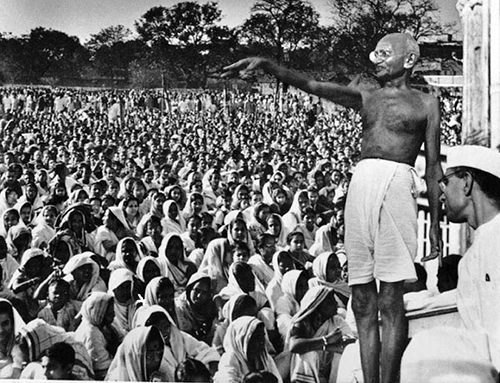
Mahatma Gandhi played a major role in transforming India's independence struggle into a mass movement. Before Gandhi's rise as a national leader, the independence movement involved different groups, including moderate political leaders, revolutionary organisations, regional movements and social reformers.
Gandhi introduced a strategy that encouraged ordinary citizens to participate in the struggle through peaceful resistance. His approach involved boycotting British goods and institutions, encouraging Indian-made products, organising peaceful demonstrations, challenging unjust laws and accepting imprisonment rather than submitting to injustice.
He also worked with the Indian National Congress, becoming one of its most influential leaders. Gandhi's political approach did not always agree with other freedom fighters. Some preferred constitutional negotiations, while others believed that armed resistance was necessary. Nevertheless, his mass movements brought millions of people into organised political action.
Gandhi led or played a major role in several important movements against British rule. Understanding these movements helps explain how his political influence grew.
The Champaran Satyagraha was Gandhi's first major Satyagraha campaign in India. Farmers in Champaran, Bihar, were forced by the plantation system to cultivate indigo under exploitative arrangements. Gandhi visited the region, listened to farmers and organised a peaceful campaign. His intervention helped bring attention to their problems, and an official inquiry followed.
The Kheda Satyagraha took place in Gujarat in 1918. Farmers were suffering because of crop failures and difficult economic conditions. They demanded relief from land revenue payments. Gandhi, along with local leaders including Sardar Vallabhbhai Patel, supported the farmers and encouraged peaceful resistance to tax demands they considered unfair under the circumstances.
In 1918, Gandhi supported textile mill workers in Ahmedabad who were demanding better wages. He encouraged the workers to remain united and peaceful and undertook a fast to strengthen their determination. The dispute was eventually referred to arbitration.
The Non-Cooperation Movement began in 1920 under Gandhi's leadership. Its objective was to challenge British authority by encouraging Indians to withdraw cooperation from colonial institutions.
● Boycott British educational institutions.
● Avoid British courts and government institutions.
● Give up certain British honours and titles.
● Boycott foreign cloth.
● Promote Khadi and Indian-made products.
● Participate in peaceful protests.
In February 1922, violence broke out at Chauri Chaura in Uttar Pradesh. A crowd attacked and burned a police station, resulting in the deaths of police personnel. Gandhi believed that the movement had moved away from its commitment to non-violence and suspended the nationwide campaign. This decision disappointed several political leaders who wanted the movement to continue.
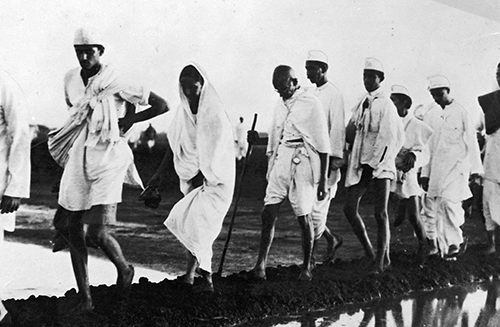
The Dandi March, also known as the Salt March, was one of Gandhi's most famous protests against British rule. The British government controlled salt production and imposed a tax on salt. Gandhi considered this an unfair burden on ordinary Indians.
On 12 March 1930, Gandhi began a march from Sabarmati Ashram with 78 volunteers. They travelled approximately 240 miles towards the coastal village of Dandi in Gujarat. On 6 April 1930, Gandhi broke the British salt law by making salt from seawater. The action inspired thousands of Indians to participate in civil disobedience.
The Quit India Movement was launched by the Indian National Congress in August 1942 during the Second World War. Gandhi demanded an immediate end to British rule in India.
At the Bombay session of the Congress on 8 August 1942, he gave his famous message, "Do or Die." The British government responded by arresting Gandhi and many other Congress leaders. Gandhi was detained at the Aga Khan Palace in Pune, where he remained imprisoned until 1944.
Gandhi's political activities were closely connected with his personal philosophy. He believed that political freedom alone was not enough. People also needed moral discipline, social equality, self-reliance and respect for others.
Ahimsa means non-violence. Gandhi believed that people should avoid causing harm to others through their actions, words and intentions. For him, non-violence was not simply refusing to fight. It required courage, patience, self-control and a willingness to face suffering without revenge.
Satyagraha is a method of resistance based on truth and non-violence. The word combines the ideas of truth and firmness. Gandhi believed that people should resist unjust laws and systems without hatred towards the individuals responsible for them.
Truth was central to Gandhi's philosophy. He believed that personal honesty and public action should be connected. He tried to apply truth in his relationships, political activities, religious beliefs and daily life.
Gandhi promoted Khadi, a hand-spun and handwoven cloth, as a symbol of economic self-reliance. He encouraged Indians to use locally made products instead of depending heavily on British manufactured goods. The spinning wheel, or charkha, became an important symbol of the freedom movement.
Gandhi believed that different religions should be respected. His religious outlook was influenced by Hindu traditions, the Bhagavad Gita, Jain ideas of non-violence, Christianity, Islam and other spiritual writings. He regularly promoted religious tolerance and Hindu-Muslim unity.
Gandhi believed that India's villages should become economically and socially self-reliant. He promoted village industries, local employment, basic education, sanitation, community participation and improved living conditions for rural people.
Gandhi worked with several major political leaders, but his relationships were not always free from disagreements. Understanding these relationships provides a clearer picture of India's independence movement.
Jawaharlal Nehru was one of Gandhi's closest political associates. Although they shared the goal of Indian independence, they sometimes differed on economic development, industrialisation and political strategy. Nehru supported modern science, industrial development and a stronger role for the state in economic planning. Gandhi placed greater emphasis on village industries, decentralisation and self-reliance.
Subhas Chandra Bose was a prominent nationalist leader who believed that stronger and more direct action was necessary to end British rule. He was elected Congress president in 1938 and again in 1939. Differences developed between Bose and Gandhi's supporters regarding political strategy and leadership. Bose resigned from the Congress presidency in 1939 and later organised the Indian National Army. Gandhi continued to support non-violent resistance.
Sardar Vallabhbhai Patel was one of Gandhi's most important political associates. Patel became closely associated with Gandhi during the Kheda Satyagraha and later led the Bardoli Satyagraha of 1928. After independence, Patel became India's first Deputy Prime Minister and Home Minister and played a major role in integrating princely states into the Indian Union.
Bhagat Singh was a revolutionary freedom fighter who believed in armed resistance against British rule. His methods differed greatly from Gandhi's commitment to non-violence. In 1931, Bhagat Singh, Rajguru and Sukhdev were executed by the British government. Gandhi raised the question of commutation with the British authorities but did not succeed in preventing the executions. His role remains debated.
Dr. B.R. Ambedkar was a major social reformer who fought against caste discrimination and untouchability. Gandhi also opposed untouchability, but the two leaders disagreed about how caste-based inequality should be addressed. One major disagreement concerned separate electorates for the Depressed Classes, as they were then officially described. Their negotiations in 1932 resulted in the Poona Pact, which replaced separate electorates with reserved seats in joint electorates.
Gandhi and Muhammad Ali Jinnah were important political leaders during the final decades of British rule. They developed different political positions regarding India's future. Jinnah became the leading figure of the Muslim League's demand for Pakistan, while Gandhi opposed the division of India and continued advocating Hindu-Muslim unity. Their political differences could not be resolved, and India was partitioned in 1947.
Gandhi strongly opposed the partition of India. He believed that Hindus and Muslims should live together in a united country, with equal respect and rights. However, by the 1940s, political tensions between the Indian National Congress and the Muslim League had increased significantly.
The demand for Pakistan became a major political issue under Muhammad Ali Jinnah's leadership. Despite Gandhi's efforts to promote communal harmony and prevent division, British India was partitioned in August 1947.
Partition was accompanied by widespread communal violence, displacement and human suffering. Gandhi travelled to areas affected by violence, including Noakhali in Bengal, where he worked to restore trust between communities. He also visited Bihar and Calcutta and later worked in Delhi to reduce communal tensions.
In January 1948, Gandhi undertook a fast in Delhi to encourage peace and protect the rights and safety of vulnerable communities.
Although Gandhi is widely respected for his contribution to non-violence and India's independence, his life and decisions have also attracted serious criticism. A balanced biography should examine both his achievements and his shortcomings.
Withdrawal of the Non-Cooperation Movement: Many supporters felt that suspending the movement after the Chauri Chaura incident weakened the national struggle.
Disagreements with Dr. B.R. Ambedkar: Ambedkar and Gandhi had different approaches to caste discrimination and political representation. Critics argue that Gandhi's approach did not go far enough in challenging the caste system.
Early statements about race in South Africa: Some of Gandhi's writings from his early South African years contain language and attitudes that reflected racial hierarchies of that period. These writings have attracted criticism from modern scholars and readers.
Experiments with celibacy: In his later life, Gandhi conducted controversial experiments intended to test his commitment to celibacy and self-control. Some involved sleeping beside young women. These practices have raised serious ethical questions, especially regarding power, consent and the effect on the women involved.
Approach to revolutionary freedom fighters: Gandhi's commitment to non-violence created disagreements with revolutionaries who believed armed resistance was necessary. His position during the execution of Bhagat Singh remains debated.
Gandhi opposed partition and repeatedly tried to prevent it. However, historians debate the political decisions and circumstances that led to the division of British India. Partition resulted from several interconnected factors, including communal tensions, political disagreements, British policies and negotiations between major political parties. It would be historically inaccurate to blame Gandhi alone for partition.
Mahatma Gandhi was assassinated on 30 January 1948 in New Delhi. He was 78 years old. At the time, he was staying at Birla House, now known as Gandhi Smriti.
He was walking towards his evening prayer meeting when Nathuram Vinayak Godse approached him and shot him at close range. Gandhi died from his injuries.
Nathuram Godse, a Hindu nationalist, assassinated Gandhi. Godse opposed Gandhi's political approach, particularly his efforts to promote Hindu-Muslim unity and his position regarding financial payments due to Pakistan after partition. Godse was arrested, tried and convicted. He was executed in November 1949.
Gandhi was cremated at Raj Ghat in New Delhi. Today, Raj Ghat is a major memorial visited by Indian citizens, foreign dignitaries and international visitors. Gandhi Smriti, the former Birla House where he was assassinated, is also preserved as a national memorial.
Gandhi was not only a political leader but also a prolific writer. His books, newspapers, articles and letters provide valuable information about his ideas, personal experiences and political activities.
| Book | What is it about? |
|---|---|
| The Story of My Experiments with Truth | Gandhi's autobiography and personal journey. |
| Hind Swaraj | His ideas about self-rule, civilisation and modern society. |
| Satyagraha in South Africa | His experiences of non-violent resistance in South Africa. |
| From Yeravda Mandir | His reflections on spiritual and ethical principles. |
| Constructive Programme: Its Meaning and Place | His ideas for social and economic improvement. |
| Key to Health | His thoughts on health and personal discipline. |
Gandhi's autobiography is titled The Story of My Experiments with Truth. It describes his life from childhood through his early years in South Africa. The book discusses his family, education, marriage, professional struggles, religious experiences, personal mistakes and the development of his philosophy.
It is particularly interesting because Gandhi does not simply describe his achievements. He openly discusses his weaknesses and the lessons he learned from his experiences. The autobiography was originally written in Gujarati and published in instalments between 1925 and 1929. Its English translation was published during the same period.
Gandhi's contribution extended beyond India's independence movement. His most important achievements include:
1.Developing Satyagraha: He developed a practical method of non-violent resistance against injustice.
2.Organising mass movements: He encouraged ordinary Indians to participate in the independence struggle.
3.Challenging British laws: His campaigns challenged colonial policies through civil disobedience.
4.Promoting economic self-reliance: He encouraged Khadi, local industries and Indian-made goods.
5.Promoting communal harmony: He worked to reduce religious tensions and encouraged peaceful coexistence.
6.Campaigning against untouchability: He made the removal of untouchability an important part of his social programme.
7Influencing global movements: His ideas influenced civil rights and freedom movements around the world.
Martin Luther King Jr., the American civil rights leader, studied Gandhi's philosophy of non-violent resistance. King used non-violent protests, marches, boycotts and civil disobedience in the struggle against racial segregation and discrimination in the United States. He openly acknowledged Gandhi's influence on his approach to social change.
Nelson Mandela recognised Gandhi's influence on the struggle against injustice in South Africa. Gandhi's experiences in South Africa created an important historical connection between the two figures. However, Mandela's political struggle was different in its methods and historical circumstances. His movement evolved to include armed resistance after the failure of earlier peaceful approaches.
Gandhi remains an important historical figure because his ideas continue to influence discussions about peace, justice, leadership and political resistance.
His life offers several lessons:
● Stand against injustice without losing your humanity.
● Be willing to accept personal responsibility for your actions.
● Practise what you expect others to follow.
● Respect different religious and cultural communities.
● Understand the power of ordinary people working together.
● Choose self-discipline over hatred and revenge.
● Remain open to learning from mistakes.
Gandhi's philosophy is not accepted by everyone, and his political decisions continue to be debated. Nevertheless, his influence on non-violent movements remains significant. His legacy is best understood by studying both his achievements and the historical controversies surrounding him.
Associated with Gandhi's birthplace and childhood family home in Gujarat.
Gandhi's important residence and centre of political and social activities. The Dandi March began here.
Gandhi established this ashram in 1936. It became an important centre for his later activities.
The former Birla House where Gandhi spent his final 144 days and was assassinated.
Gandhi's cremation site and national memorial.
These places help visitors understand Gandhi's life beyond textbooks and photographs.
Mahatma Gandhi's life was a journey from a shy young boy in Porbandar to an internationally recognised leader of non-violent resistance.
His experiences in England and South Africa shaped his thinking, while his work in India transformed the country's independence movement into a mass struggle.
His methods were based on truth, non-violence, self-discipline and peaceful resistance. Although his decisions, beliefs and personal life continue to attract criticism and debate, his influence on India's history and international movements for justice cannot be ignored.
Studying Mohandas Karamchand Gandhi helps us understand not only how India fought for independence but also how ordinary people can organise themselves to challenge injustice.
His life was not without mistakes or contradictions. That is precisely why studying the complete history of Gandhi, rather than only his popular image, is important.
Mahatma Gandhi was affectionately called Bapu, which means father in Hindi and Gujarati. The name reflected the respect and affection many Indians had for him.
Gandhi's height is commonly reported as approximately 5 feet 5 inches (165 cm). Historical sources do not always provide a consistent official measurement.
No. Gandhi was nominated for the Nobel Peace Prize five times, in 1937, 1938, 1939, 1947 and 1948, but never received it. He was assassinated before the 1948 award was decided. The Nobel Committee did not award the prize that year.
Gandhi and Albert Einstein communicated through letters, although they did not meet in person. Einstein admired Gandhi's commitment to non-violent resistance and wrote about his influence on humanity.
Gandhi followed a predominantly vegetarian diet throughout much of his adult life. He experimented with different foods and eating habits, including fruits, vegetables, nuts and simple meals. He also wrote about food and health in his writings.
Gandhi promoted the Charkha, or spinning wheel, to encourage Indian-made cloth, rural employment and economic self-reliance. It became a symbol of resistance against dependence on British manufactured textiles.
Gandhi was imprisoned several times in South Africa and India. The exact number can vary depending on whether individual arrests and periods of detention are counted separately. His imprisonments were mainly connected with his political campaigns and civil disobedience.
One of Gandhi's central messages was that truth and non-violence should guide both personal behaviour and public action. He believed that injustice should be challenged without hatred or revenge.
No. Gandhi experimented with eating meat during his teenage years but stopped because he did not want to break his promise to his mother. He later became a strong supporter of vegetarianism and wrote extensively about diet.
The Gandhi Heritage Portal provides access to his collected works, letters, newspapers, autobiography and other historical documents. It is one of the most useful resources for studying Gandhi directly through his writings.

Powered By MNT Group